If your car dies immediately after you jump-start it and drive away, the alternator is probably failing. If it starts fine after a jump and runs normally for days, the battery is more likely the culprit. Those are the two most telling behaviors, but there are other signs that help separate the two - and sometimes both fail at the same time, which is when people really get confused.
Battery Symptoms vs. Alternator Symptoms
The two systems fail in different ways, and the behaviors below tell them apart. A weak battery shows up at startup; a failing alternator shows up while the car is running.
The Jump-Start Test
The jump-start test is the most useful field diagnostic tool you have. Jump the car and drive it normally. If the battery was the problem - meaning the battery just discharged below starting threshold - the alternator will recharge it while you drive, and the car will run fine indefinitely. Come back in a few days, it starts without issue.
If the alternator is failing, the battery is providing all the electrical power the car needs while running. A fully charged battery can do that for a limited time - anywhere from 20 minutes to a couple of hours depending on electrical load - before it depletes to the point where the engine dies. If you jump a car and it dies again within 30 minutes of normal driving, the alternator is not keeping the battery charged. That is an alternator problem until proven otherwise.
Can Both Fail at the Same Time?
Yes, and it is more common than people think. A failing alternator that has been overworking for months to compensate for a weak battery often takes the battery down with it. By the time the car stops starting reliably, both components are compromised. The battery cannot hold a charge, and the alternator cannot provide enough output to cover for it. At Broadway Servicenter in Garden City, we diagnose both components together before recommending what to replace, because guessing wrong means a second repair visit.
What About the Belt?
A loose or worn serpentine belt can make a healthy alternator behave like a failing one - the belt drives the alternator, and if it is slipping, the alternator is not turning at full speed and cannot produce proper output. If you hear squealing from the engine bay when you first start the car or under electrical load, and the battery light is on, check the belt before assuming the alternator is bad. It is a far cheaper fix.
Erratic Electrical Accessories While Driving
Radio cutting in and out, power windows moving slowly, dashboard gauges behaving oddly, interior lights flickering while the car is running - these are alternator symptoms, not battery symptoms. The battery provides starting power; the alternator provides running power. When accessories misbehave while the engine is running, the alternator is not keeping up with the electrical demand. A dead battery does not cause this because the engine is already running.
Battery Warning Light: What It Actually Means
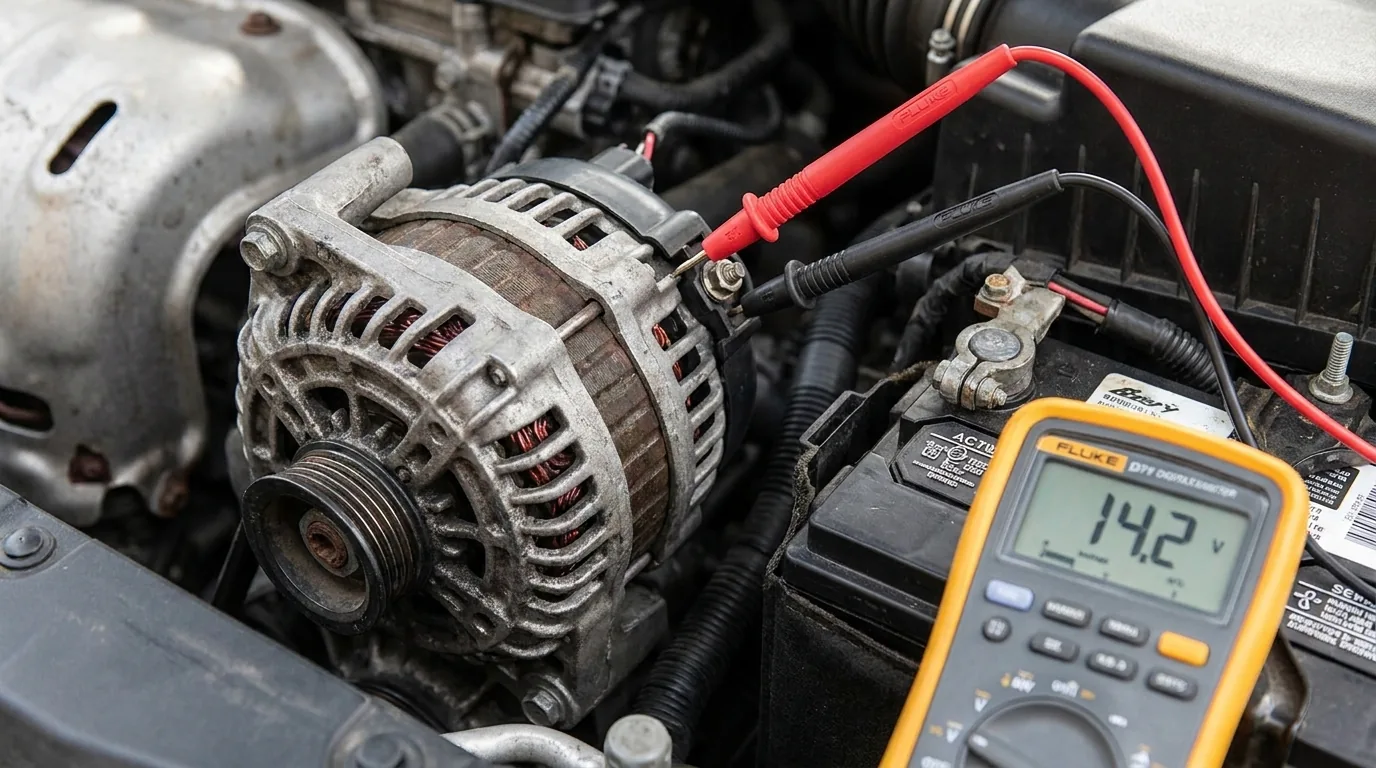
The battery light does not mean the battery is dead. It means the charging system is operating outside its normal voltage range. A healthy charging system at idle with accessories running should measure between 13.5 and 14.5 volts. Below that range, the alternator is not keeping up. Above that range - overcharging - the voltage regulator may be failing, which can damage the battery from the other direction. The light itself does not tell you which - proper testing does. A voltmeter reading at idle is the starting point, but load testing is what confirms the diagnosis.
Bring it in before you get stranded. Battery and charging system testing takes 15 minutes at Broadway Servicenter in Garden City. We test both components before recommending either one. Call (516) 681-0122 or book an appointment online.
Battery and alternator testing takes 15 minutes. We test both before recommending either replacement. Garden City, NY.
☎ Call (516) 681-0122 Book Online
Mon - Fri: 8:00am - 5:00pm
Saturday: 8:00am - 3:00pm
Sunday: Closed