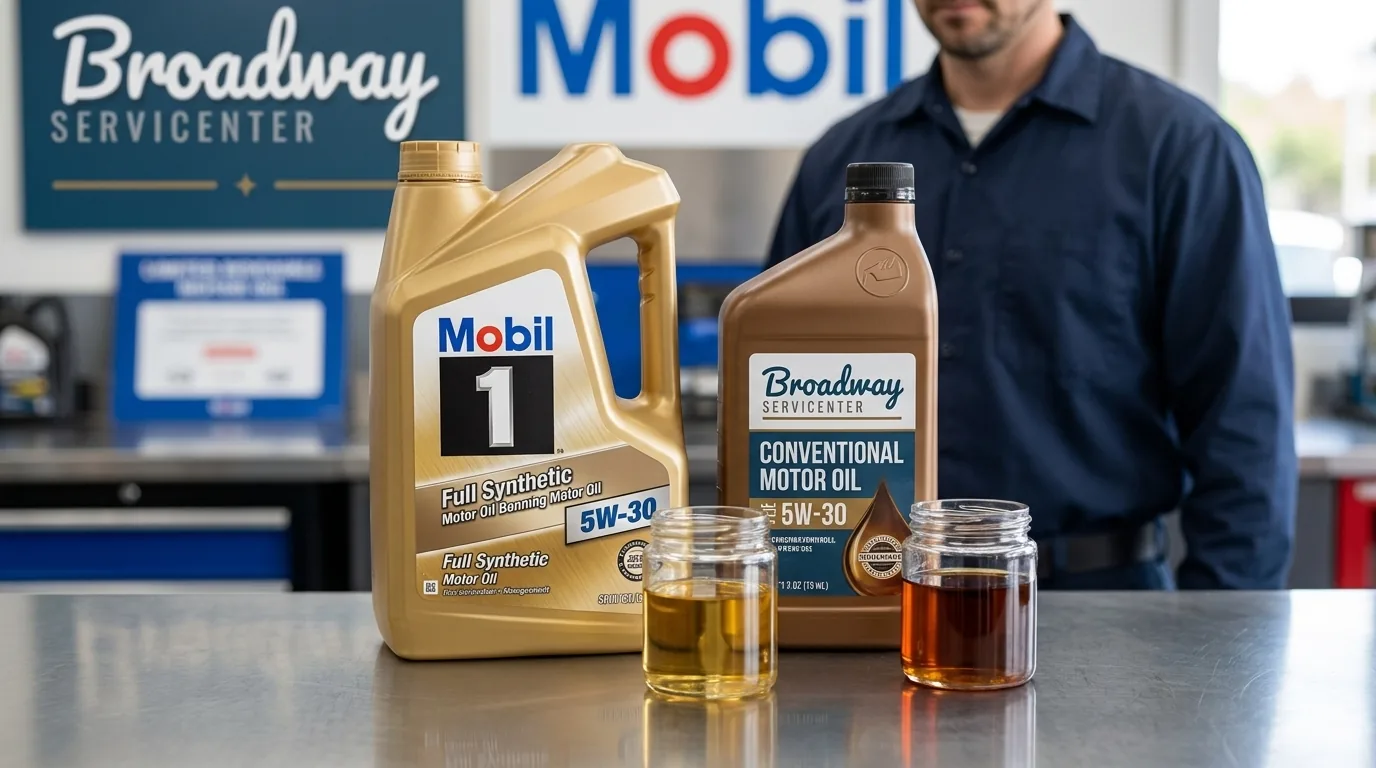
Most vehicles manufactured in the last 15 years require full synthetic oil - not because synthetic is always better in the abstract, but because the engine was specifically designed around its flow characteristics and approval specifications. Using conventional oil in an engine that requires synthetic can affect variable valve timing performance, turbocharger lubrication, and fuel economy. If your manufacturer specifies synthetic, that is not a suggestion. Use synthetic.
What Is the Actual Difference?
Synthetic oil is manufactured from chemically engineered base stocks rather than being refined directly from crude oil. That chemical engineering produces a more consistent molecular structure, which gives synthetic several real advantages over conventional oil: better flow at cold temperatures, better resistance to thermal breakdown at high temperatures, less tendency to evaporate under sustained heat, and longer service life between changes. Conventional oil is refined from crude petroleum and retains more natural variability in molecular size and properties.
This is not marketing language. The performance differences are measurable and they matter most at startup (when cold oil flows slowly to critical components) and at sustained high temperatures (when conventional oil begins to oxidize and break down).
Does Your Car Require Synthetic?
Check the owner’s manual or the oil cap - many manufacturers print the specification directly on the cap. BMW requires Longlife-01 or LL-04 specification oil. Mercedes requires MB 229.5 or 229.51. VW and Audi require 502.00 or 504.00 specifications. Toyota specifies 0W-20 full synthetic for most modern applications. These specifications exist because engineers tested those engines specifically with those oils. Meeting the specification is what protects the engine under warranty and beyond. Using the wrong oil does not cause immediate catastrophic failure, but it does mean the engine is not operating as designed.
Turbocharged Engines Need Synthetic - No Argument
Any turbocharged engine benefits significantly from full synthetic over conventional oil. Turbochargers run at extremely high temperatures - the turbo housing can reach temperatures well above what conventional oil handles well. The turbocharger depends on engine oil for both lubrication and cooling of the central shaft bearing. Conventional oil breaks down faster at those temperatures and can undergo coking - leaving carbon deposits in turbo oil passages that starve the bearing of lubrication. Turbo failure from oil coking is common, expensive, and almost entirely preventable with the correct synthetic oil and appropriate change intervals.
Older Engines and Conventional Oil
Engines designed before roughly 2000 on most domestic vehicles were engineered around conventional oil viscosity properties. Running synthetic in an older engine is generally fine and will not cause harm. However, older high-mileage engines with significant wear sometimes see slightly increased oil consumption on full synthetic because the lower viscosity base stock can pass through worn piston rings or valve seals more easily than thicker conventional oil. High-mileage synthetic blends with slightly heavier base stocks exist precisely for this situation and work well.
Synthetic Blend - Not a Shortcut
Synthetic blend oil - a mixture of synthetic and conventional base stocks - is not a compromise or a cheaper alternative when full synthetic is required. It is the correct oil for the specifications that call for it. Some manufacturers specify synthetic blend for certain applications and it performs exactly as designed. Do not assume synthetic blend is a lesser choice - it is the right choice when it matches the specification.
Oil Change Intervals - The Real Answer for Nassau County
Synthetic oil does allow for longer intervals than conventional oil under ideal conditions. But Nassau County stop-and-go commuting is not ideal conditions. Short trips that do not fully warm the engine, sustained idle in traffic, summer heat, and winter cold all reduce the effective service life of any oil. We recommend intervals appropriate for your actual driving pattern, not the theoretical maximum from a manufacturer’s ideal-conditions calculation. If you commute 20 minutes each way in Nassau County traffic, your oil is working harder than it would at a steady highway cruise.
For most Garden City and Nassau County drivers using full synthetic: every 5,000 to 7,500 miles is a reasonable service interval. We look up your vehicle’s specification by VIN at every oil change at Broadway Servicenter before we recommend anything.
Not sure what oil your car needs? We look it up by your VIN before every service at Broadway Servicenter. 640 Old Country Road, Garden City. Call (516) 681-0122.
We confirm your oil specification by VIN before every service. Full synthetic, blend, or conventional - the right oil for your engine. Garden City, NY.
☎ Call (516) 681-0122 Book Online
Mon - Fri: 8:00am - 5:00pm
Saturday: 8:00am - 3:00pm
Sunday: Closed